Mastering Sarah Moss’ Ghost Wall
Since the MAGA movement, there has been a rise in far right nationalism in all major liberal democracies. In Australia, support for Paulin Hanson’s One Nation Party has skyrocketed over the past 6 months, platforming a political ideology that is against immigration and towards creating a racially homogenous society. At the heart of nationalism is romanticising Australia’s past and seeking to restore a time period where women and racially diverse minorities were oppressed.
Seeking to raise awareness on the issue, Sarah Moss’ Folk Horror novella “Ghost Wall” features a radical nationalist who idealises Britain and seeks to reconstruct racial and gender hierarchies in the 1990s. It’s a cautionary tale about the danger of extremism in perpetuating abuse and corroding one’s morality.
If you are studying this terrifyingly beautiful book, than you are extremely lucky! Once you get used to the slightly unconventional dialogue (those who’ve read the book, will get me!), you’re guaranteed to be pulled in and fully immersed in the world Moss has masterfully constructed. I hope you enjoy reading through our text guide and wish you the best of luck for your assessment!
Plot Summary:
Ghost Wall is set in the 1990s within a rural, isolated area of Northumberland near the Scottish border. Silvie, Bill and Alison are joining a group of University students living as Ancient Britons from the Iron Age for their “Experiential Archaeology” course. Their Professor, Jim Slade, aims to offer his students a taste of Celtic culture, but Bill, being a radical nationalist, is passionate about replicating all aspects of Ancient society, including its rituals and gender politics. As such, Bill orders the male students to hunt, while demanding the women, including his wife, to cook, clean and forage for berries.
Throughout the novella, Bill frequently abuses Silvie (and Alison on occasion) for disobeying and disrespecting his authority. This becomes apparent to the female student Molly, who confronts Silvie, but is met with denial and irritation. As the tension rises, the men—who have been influenced by Bill at this stage—plan to re-enact a bog sacrifice from the Iron Age, with Silvie as their victim. And so, Molly seeks help from Trudi, a midwife from a nearby town, who puts an end to Bill’s radical behaviour.
Context:
Historical Context:
Bog Bodies:
Bog bodies are naturally mummified human remains found in peat bogs, particularly across Northern Europe, that have been preserved for centuries by the bogs’ acidic, low-oxygen, and waterlogged conditions. These environments slow decomposition, often leaving skin, hair, and clothing remarkably intact, allowing researchers to study not only the physical characteristics of the individuals but also their diet, health, and even last meals. Many bog bodies show signs of violent deaths, such as strangulation, stabbing, or bludgeoning, suggesting ritual sacrifice, execution, or punishment in the past.
Celtic Tribes vs Romans:
Initially, the Celts inhabited Britain, an ancient tribal society known for its warrior culture, elaborate art, ritualistic practices, and deep spiritual connection to the land. However, in 43 CE, the Romans conquered Britain, subjugating the Celtic tribes and integrating the territory into their empire. They constructed Hadrian’s Wall to protect the northern frontier from rebellious tribes, a structure that is referenced in Moss’ novella. Amongst contemporary conservative groups, the Celts are frequently idealised as a symbol of “pure” British heritage.
The National Front (Britain's Far Right Party):
The National Front (NF) is a far-right, British nationalist and white supremacist political party founded in 1967 by A. K. Chesterton, a former fascist activist. John Tyndall led the party politically in its early years, seeking to exploit racial anxieties amid rising post-war immigration and economic uncertainty in the United Kingdom.
At its core, the NF campaigned aggressively to halt all non-white immigration, strip citizenship from non-white residents, and promote an ethnically homogeneous Britain. It also opposed feminism, LGBTQIA+ rights, and liberal democracy, presenting itself as a defender of traditional British identity and morality. During the 1970s, the party gained national visibility through street marches, rallies, and attempts to stand in local elections.
By the late 1970s and early 1980s, internal factionalism, public revulsion at violence, and defections to successor groups such as the British National Party sharply reduced the NF’s influence. Nevertheless, its legacy persisted in heightened racial tensions, debates over immigration and policing, and the continued presence of far-right activism in British politics.
Third Wave Feminism:
Led by Gen X women, the third wave of feminism emerged in the 1990s as a response to the televised Anita Hill hearings, where a woman was publicly subjected to intense scrutiny while accusing a powerful Supreme Court nominee of sexual harassment. In light of this, Ms. Magazine published an article by Rebecca Walker, titled, "Becoming the Third Wave", in which she stated: "I am not a post-feminism feminist. I am the third wave."
Central to third-wave feminism is intersectionality, a term Kimberlé Crenshaw coined to describe how race, class, gender, and sexuality intersect in systems of oppression. Unlike earlier waves, third-wave feminists emphasised diverse experiences, advocating for a movement that recognises the unique struggles of women of colour, LGBTQ+ individuals, and those from marginalised communities.
Another key feature is the reclamation of identity and sexuality. Women challenged societal expectations by openly discussing and representing their sexual desires, rejecting the rigid labels of “virtuous” or “sexualised” that had long constrained them. Through music, film, literature, and fashion, feminists embraced sex-positivity, body positivity, and personal style as forms of empowerment.
Societal Context:
Domestic Abuse & Trauma:
Domestic abuse is a pattern of behaviour in which one person exerts power and control over another within an intimate or familial relationship. It can take many forms, including physical abuse (hitting, slapping), emotional/psychological abuse (passive aggression, intimidation), sexual abuse (nonconsensual sex, rape), and financial abuse (restricting access to money or resources).
When experiencing abuse, our brains can dissociate by detaching from our thoughts, feelings, and identity. This can involve feeling disconnected from your body (i.e. depersonalisation), disconnected from your reality (i.e. derealisation), and emotional numbness.
With repeated abuse, some individuals might develop trauma, an emotional response designed to help you cope with an extremely distressing experience. This can be physical (excessive alertness, fatigue, disturbed sleep), cognitive (intrusive thoughts, flashbacks), behavioural (avoidance, social withdrawal, isolation), and emotional (fear, numbness, guilt). Some people develop more serious conditions such as anxiety, depression, and PTSD.
Authorial Context:
Sarah Moss:
Born in 1975, Sarah Moss is an English writer and academic who has published nine novels and two memoirs. At the age of 2, Moss moved from Glasgow, Scotland to Manchester, England, where she lived for a number of years. When she turned 18, she studied at the University of Oxford, where she earned a BA, Master of Studies and Doctor of Philosophy in English Literature. Professionally, she has taught at a number of tertiary institutions, including the University of Iceland, the University of Exeter, and the University of Warwick.
She has described herself as a "bike-riding vegetarian feminist" and her work explores themes of environmentalism, social justice, feminism, and agnosticism. She generally aligns with liberal and left-leaning perspectives, which are often reflected in her writing.
Authorial Intent:
Romanticisation of History:
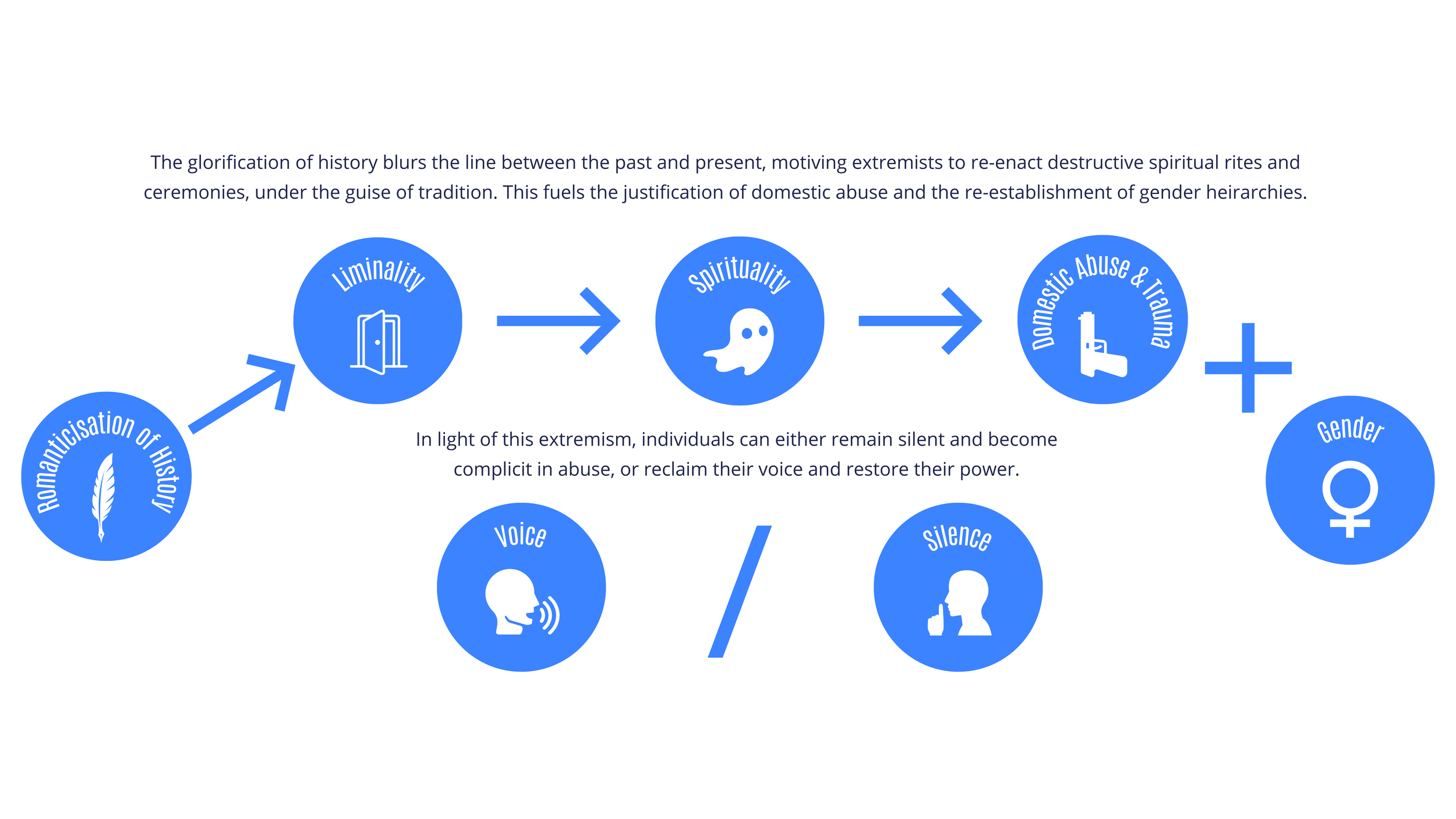
Providing a warning of nationalist ideologies, Moss critiques how extremist individuals who glorify and re-enact the past tend to blur the line between fantasy and reality, prompting them to enforce rigid gender roles, rationalise racism, and justify abuse, under the guise of tradition. This is particularly dangerous as human cruelty and violence were pervasive throughout Britain’s history, implying that its romanticisation inevitably imbues contemporary society with brutality. Yet Moss simultaneously demonstrates that archaeologists can engage with history sensibly and ethically by acknowledging the historical context of their research and embracing modern technological advancements.
Domestic Abuse & Trauma:
Moss shines a spotlight on the cruelty and immorality of all forms of domestic abuse — physical, verbal, sexual and financial. She demonstrates that abusers maintain control by creating a culture of silence and manipulating victims into perceiving brutality as a form of love, discipline, and punishment they deserve. This can cause them to develop trauma responses as a tool for survival — they may experience heightened levels of fear, develop an acute ability to sense danger, or turn to escapism. At the same time, Moss shows how victims can internalise the attitudes of their oppressors, driving them to spread hate and impose further harm.
Gender:
Challenging the conservative view that gender is purely a product of one's biological sex, Moss suggests that young boys are socially conditioned to internalise toxic masculinity. This can reduce mens’ vulnerability and empathy, prompting them to enforce rigid gender roles and perceive women as inferior. In particular, they may express shame over female anatomy or blame women for provoking the ‘natural tendencies of men.’ Despite this, drawing from third wave feminism, Moss endorses female empowerment as a vehicle for enabling women to reclaim their agency.
Silence vs Voice:
While Moss argues that silence can transform into the normalisation and exacerbation of violence, she recognises that women are often desensitised to brutality and socialised to ignore abusive behaviour; therefore, she does not villainise those who are complacent, but portrays them as victims themselves. Yet at the same time, Moss views silence as a powerful coping mechanism, allowing vulnerable individuals to protect themselves from anguish. However, in the long term, she hopes that women can break the cycle of abuse by reclaiming their voice and restoring their power.
Liminality:
According to EBSCO, liminality is a concept that originates from anthropology and psychology, referring to the transitional phase individuals experience when moving between two distinct stages of life. As a coming-of-age novel, Ghost Wall explores its 17-year-old protagonist transitioning from childhood to adulthood, illustrating the loss of innocence and inevitability of suffering that emerges with maturity. This sense of liminality is heightened within members of the LGBTQIA+ community, who are caught between their former self and the person they hope to become. Alternatively, through a political lens, when nationalists are fixated over the past, they blur the line between fantasy and reality, exposing contemporary society to danger. Thus, liminality can be extremely harmful, particularly for individuals with an inability to ground themselves in reality.
Spirituality:
Moss, being an agnostic, views ancient spiritual rituals as irrational and harmful, as they often involve brutal human sacrifices and the inhumane treatment of animal remains. Thus, individuals who glorify these ceremonies are complicit in perpetuating cruelty under the guise of tradition. While she recognises the benefits of harmless tokens and talismans, ultimately she believes they are ineffective at protecting humanity from danger.
Narrative Elements:
Form — Novella.
Genre — Psychological Drama / Coming of Age / Folk Horror. Conventions and features include: ritualised violence and sacrifice, remote landscapes, ancient ruins, references to folklore, and the uncanny.
Setting — The 1990s within a rural, isolated area of Northumberland near the Scottish border.
Focalisation — Focalised through the perspective of Silvie, a 17 year old British girl.
Tense — Present tense.
Person — First person.
Motifs:
The Ghost Wall — the boys construct a Ghost Wall—a ritualistic structure used by Celts to fend off the Romans—symbolising their tendency to blur the line between the past and present.
The Bog Sacrifice — the bog girl’s sacrifice demonstrates the brutality of Britain’s history and, in turn, the danger of its romanticisation.
Ghosts — After they have perished, the bog sacrifices are likened to ghosts, as they only exist as victims and objects of violence; thus, the cruelty of humanity stems from the permanence of the harm they are capable of inflicting.
Iron Age Leather Belt — Bill whips Silvie with a leather belt, symbolising the viciousness of toxic masculinity, misogyny, and domestic abuse.
Rowan Trees — even though rowan trees supposedly hold protective qualities, they are unable to prevent the unnamed bog girl from being murdered or Silvie from being assaulted by her father, demonstrating that spiritual talismans are insufficient at providing protection from human cruelty.
Female Anatomy — Fuelled by misogyny, Bill is ashamed of Silvie's naked body, possibly because it represents empowerment and, in turn, challenges the patriarchy.
Sexual Descriptions of Nature — while the environment is typically feminised in literature, Moss likens the landscape of Northumberland to a masculine oppressor, sexually exploiting Silvie.
Silvie's Myrtle Crown — by gifting Molly a crown she personally weaved together out of myrtle—a widely recognised symbol for love—Silvie is externalising her suppressed queer desires and, by extension, defying her father's control.
Sitting Down — When Alison sits down, she is not rewarding herself for completing hard work, but apathetically resigning after she is assaulted, representing how she has surrendered to Bill’s control.
Light vs Darkness — darkness symbolises humanity's inherent capacity for violence and ignorance, while light represents hope, modernity, and the potential for liberation and self-awareness.
Silvie's Name — Although the name Silvie is derived from the Latin name Sylvia, Bill was inspired by the name of the Celtic goddess Sulevia. Hence, when Molly calls Silvie "goddess of the groves," she is referring to her connection to the Roman Empire not the Celtics, deliberately separating her from Bill and the identity he imposed upon her.
Prompt Bank:
"I indulged myself with the idea that ancient knowledge runs somehow in our blood…" Ghost Wall demonstrates the interconnectedness between the past and present. Discuss.
"Mum was hanging over her cauldron again and the guys were playing with big sticks…" In Ghost Wall, gender roles dictate the trajectory of the characters' lives. Do you agree?
How does Ghost Wall expose the cruelty and brutality of domestic abuse?
In Ghost Wall, only the male characters struggle distinguishing fantasy from reality. To what extent do you agree?
In Ghost Wall, religious offerings and spiritual safeguards cause greater harm than good. Discuss.
Ghost Wall suggests that complacency is complicit. To what extent do you agree?
"The boys used to run around the playground with their arms wide, making bomb noises." Ghost Wall shows that the violence of men is attributed to social conditioning. Discuss.
"…as the belt sang through the sunny air, I thought hard about the tree between my hands, about the cells in its leaves photosynthesizing the afternoon sun…" In Ghost Wall, escapism is the only coping mechanism for victims of abuse. Do you agree?
To what extent does Ghost Wall suggest that the transition into adulthood forces young people to confront uncomfortable truths about themselves and the world around them?
“Yeah, she said, and people have been dying of cholera and dysentery for centuries, yay for nature’s way." Ghost Wall shows that the danger of nationalism stems from its desire to create an idealistic world that never existed. Do you agree?
Exemplary Essay:
Ghost Wall warns of the danger of glorifying the past. To what extent do you agree?
Providing a commentary on the rise of nationalism in liberal democracies worldwide, Sarah Moss' 2018 Folk Horror novella "Ghost Wall" features a group of experiential archaeologists who become increasingly radical as they adopt the persona of Iron Age Britons. Throughout the text, Moss depicts the Iron Age as a violent, merciless period of human history, marked by ritualistic practices that spread overwhelming pain and suffering. In doing so, Moss vehemently denounces individuals who glorify the cruelty and injustice of the past, suggesting that their behaviour culminates in the rationalisation of oppression. Interestingly, however, Moss argues that individuals who view racial and gender hierarchies as inherent are often not ignorant — they are fully aware that minorities have historically faced discrimination, yet seek to reconstruct caste systems regardless. Therefore, it is not idealistic Britains, but innately callous individuals who pose the greatest threat to humanity.
Moss scrutinises the history of the United Kingdom for spreading human cruelty. While the environment, being portrayed as maternal in Romantic-era poetry, is culturally associated with femininity in Britain, the natural landscape of Northumberland is personified as a masculine oppressor in Moss' novella, "stroking" Silvie's sunburn and "filtering through [her] knickers." Here, Moss' use of erotic imagery is reminiscent of Bill's abuse, in which he brutally strikes Silvie with an "Iron Age leather belt," an instrument of violence produced from the Earth's resources. By sexualising and weaponising nature—a timeless, eternal element of the universe that predates the modern era—Moss therefore accentuates how ferocity and callousness were pervasive throughout Britain's history. Further intensifying this harsh reality, Moss, reinforcing a trope of Folk Horror, explores the savagery committed by Celtic tribes willing to sacrifice vulnerable members of their community to appease the gods. In particular, they stored their "ancestors’ half-smoked corpses up in the rafters… peering down empty-eyed." In this passage, Moss deliberately depicts the bodies as ghostly figures, existing in a liminal space between life and death to elicit a sense of uncanny and fear within her audience, mirroring the horrifying, inhumane acts committed by Celts in the name of faith. Alongside human remains, rowan trees were believed to hold protective qualities, so were often "planted at doorways and boundaries" to "deter evil spirits." Yet ironically, prior to the unnamed bog girl's sacrifice in the prologue, Moss vividly illustrates the sound of her cries "echo[ing] across the marsh" and "sing[ing] through the bare branches of rowan" trees; thus, they transform from the embodiment of protection, to a physical representation of human cruelty, suggesting that no corner of the universe, not even lucky tokens, can escape the violence imbued within Britain's heritage, setting the foundation for Moss' critique of its romanticisation.
Moss illustrates how the glorification of the past drives extremists to enforce rigid gender roles. Bill romanticises the Iron Age, perceiving objectively subpar ancient tools and materials as superior to modern technology. In particular, he insists that "women managed well enough" in the Iron Age without "spending money on [sanitary products]," which creates a sense of irony, revealing his idealistic belief that female healthcare was more accessible throughout history. This drives Bill to re-enact the gender politics of the Iron Age, given he orders Alison to prepare "proper meals" and "hang over her cauldron," forcing her to fulfil the role of a traditional Celtic wife. Here, the pronoun "her" implies that Alison possesses ownership over her cooking equipment, confining her to the domestic sphere and her subservient position in society. Simultaneously, by depicting a cauldron, Moss likens Alison to a witch—a term that has been historically used to oppress women throughout history—further stripping away her authority. In stark contrast, Moss describes the male campers "playing with big sticks," satirically mocking the absurdity of heightening the power of immature men by providing them with weapons of mass destruction. Therefore, the campsite, with its conventional gender roles, becomes a microcosm for Ancient British society, accentuating how the romanticisation of a nation's heritage inevitably results in the reestablishment of social hierarchies. This is reinforced through Silvie's observation that her fellow archaeologists have become the "ghosts" of the Ancient Celts, as they are not merely drawing from traditional stereotypes, but are embodying them. This gothic metaphor emphasises how their identities, being orthodox and primal, are more closely aligned to Britons from the Iron Age, than modern human beings, bolstering Moss’ critique of the regressive consequences of romanticising Britain’s legacy. Thus, idealistic conservatives are not simply naïve for believing they are capable of reversing centuries of progress; they are the embodiment of immorality.
Nationalists—often white, heterosexual men—view the gender and racial hierarchy as natural and inevitable; therefore, Moss argues that the greatest threat to mankind is not extremists who romanticise history, but those who, fully aware of historical injustices, seek to uphold inequitable power structures in contemporary society. While Bill is certainly idealistic, he is simultaneously educated, politically aware, and cognizant that marginalised communities have historically experienced subjugation. As Bill is travelling with the archaeologists, he invites them to "imagine" how Ancient Britons reacted to "negroes" assisting the Roman Empire in constructing Hadrian's Wall. By deliberately creating a sense of ambiguity, Moss exposes how Bill is positioning his fellow campers to envision their disapproval, showcasing how he is conscious that white Brits possess internalised racism and, in turn, a tendency to dehumanise members of the black community. Yet he is overtly prejudiced towards Britain's multicultural population, considering he is drawn towards nationalism because he craves his "own ancestry" and wishes to be a descendant of "some tribe [that] sprung from English soil like mushrooms in the sunlight." In this moment, Moss highlights that Bill longs for a physical connection to his land, reflecting his preoccupation with maintaining an exclusively European lineage and reinforcing his view that ethnic Brits are inferior. This prompts him to name his daughter after the "Ancient British Goddess" Sulevia—a deity at the top of the cosmic hierarchy—indirectly relegating the remainder of humanity, ethnic minorities, to the margins. Hence, although glorifying one's past is destructive, re-constructing systems that are indisputably oppressive is one of the most reprehensible acts one can partake in.
In essence, although Ghost Wall is a cautionary tale about the danger of idolising a nation's violent past, the gothic text ultimately refuses to attribute the behaviour of far-right wing nationalists to ignorance; instead, Moss is crystal clear that their eagerness to re-enact the cruelty of their nation's heritage stems from their destructive, immoral preoccupation with manufacturing oppression and injustice. Through this, Moss invites her progressive, primarily English readers to recognise the obligation they have to address the corrosive legacy of The National Front and tackle the rise of fascism in their country.